Complete health screening
CBC with platelet assessment, blood-film review, liver- and kidney-associated biochemistry, blood typing and PCR testing for relevant tick-borne pathogens.
Cesalpino runs a canine blood donor programme in Mumbai. Enrolled dogs receive a full health screen, vaccination, deworming and year-round tick and flea prevention at no cost. Every dog in the donor household also receives priority access to a compatible product if they ever need one. In return we ask for something simple and serious: commitment.
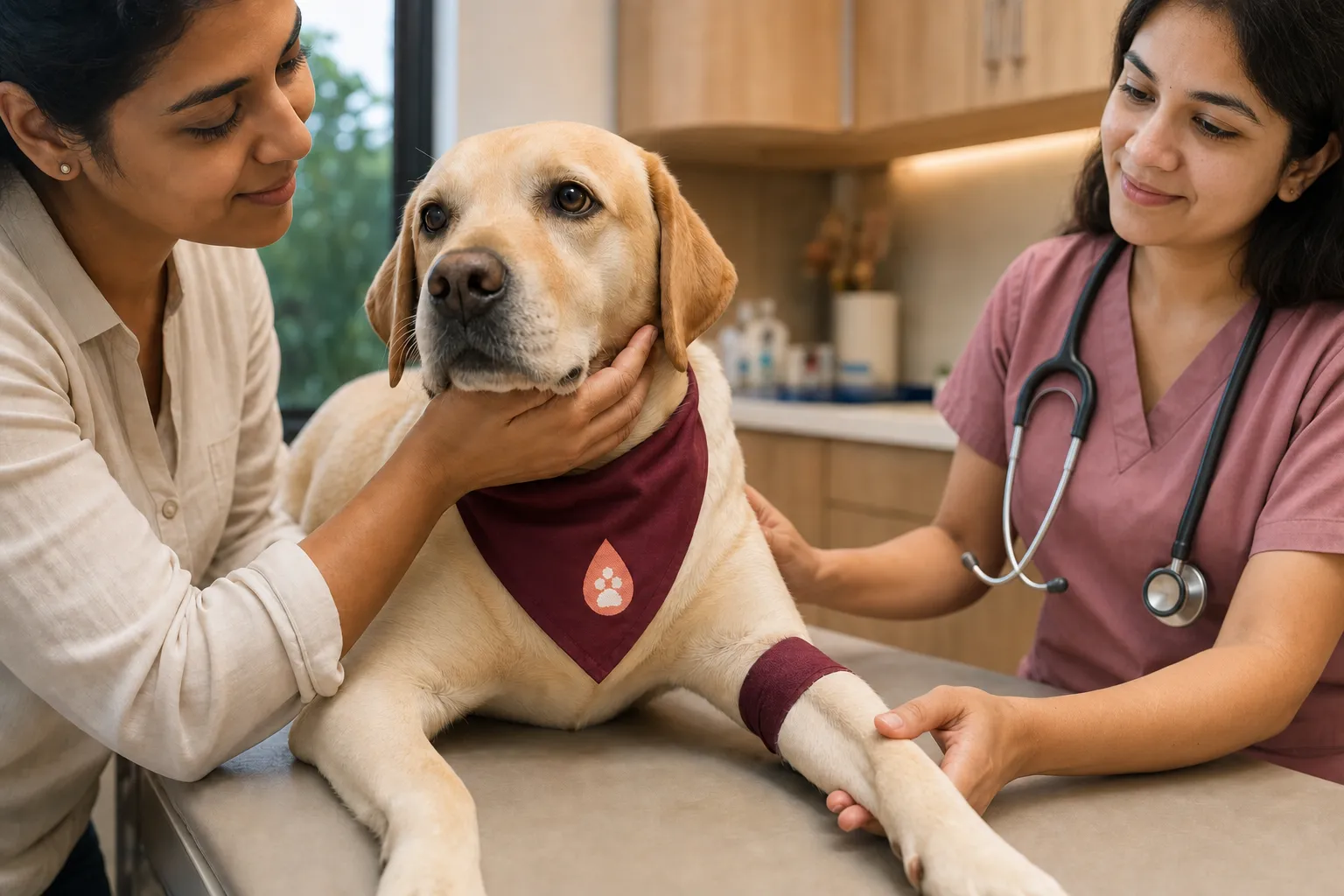
Included while enrolled
The enrolled donor’s screening and preventive-care programme is provided at no cost to the family.
CBC with platelet assessment, blood-film review, liver- and kidney-associated biochemistry, blood typing and PCR testing for relevant tick-borne pathogens.
The donor’s vaccine record is reviewed and the appropriate ongoing schedule is provided while they remain enrolled.
A documented parasite-control plan based on the dog’s age, lifestyle, exposure and previous results.
The selected preventive, dose and next due date are recorded so protection does not depend on memory.
Families receive the results, and repeat measurements build a useful record of change over time.
Eligibility
These are the criteria we assess at enrolment. Meeting them does not guarantee a place, and not meeting one does not automatically rule your dog out. The final decision always sits with our veterinary team, who look at the whole animal rather than a checklist.
| Criterion | Requirement | Why it matters |
|---|---|---|
| Age | 1 to 9 years | Under one, dogs are still growing. After nine we retire donors on welfare grounds, regardless of how well they look. |
| General health | Healthy, no chronic illness | No ongoing medical condition, no current medication other than routine preventives, and no history of having received a transfusion. |
| Temperament | Calm with handling | Donation is done without sedation wherever possible. A dog who is comfortable lying still is a dog having a better experience. |
| Preventive care | Up to date | Vaccination and parasite control current at enrolment. We take this over and fund it once your dog joins. |
| Commitment | Required | The programme only works if donors return on schedule. Patients are counted on it. Please do not enrol if you cannot commit. |
A blood donor programme is a promise made in advance. When a veterinary team calls us at short notice for a patient who is bleeding out, the product either exists or it does not. That depends entirely on donors having turned up when they said they would. We would much rather you say no now than say yes and not return.
Screening begins at home
A calm home visit shows us how the dog normally behaves and handles gentle examination. It also gives the family time to understand the programme before deciding whether to proceed.
Laboratory screening follows the clinical assessment. Read the complete explanation of the CBC, platelets, LFT, KFT, PCR panel, vaccination, deworming and parasite prevention.
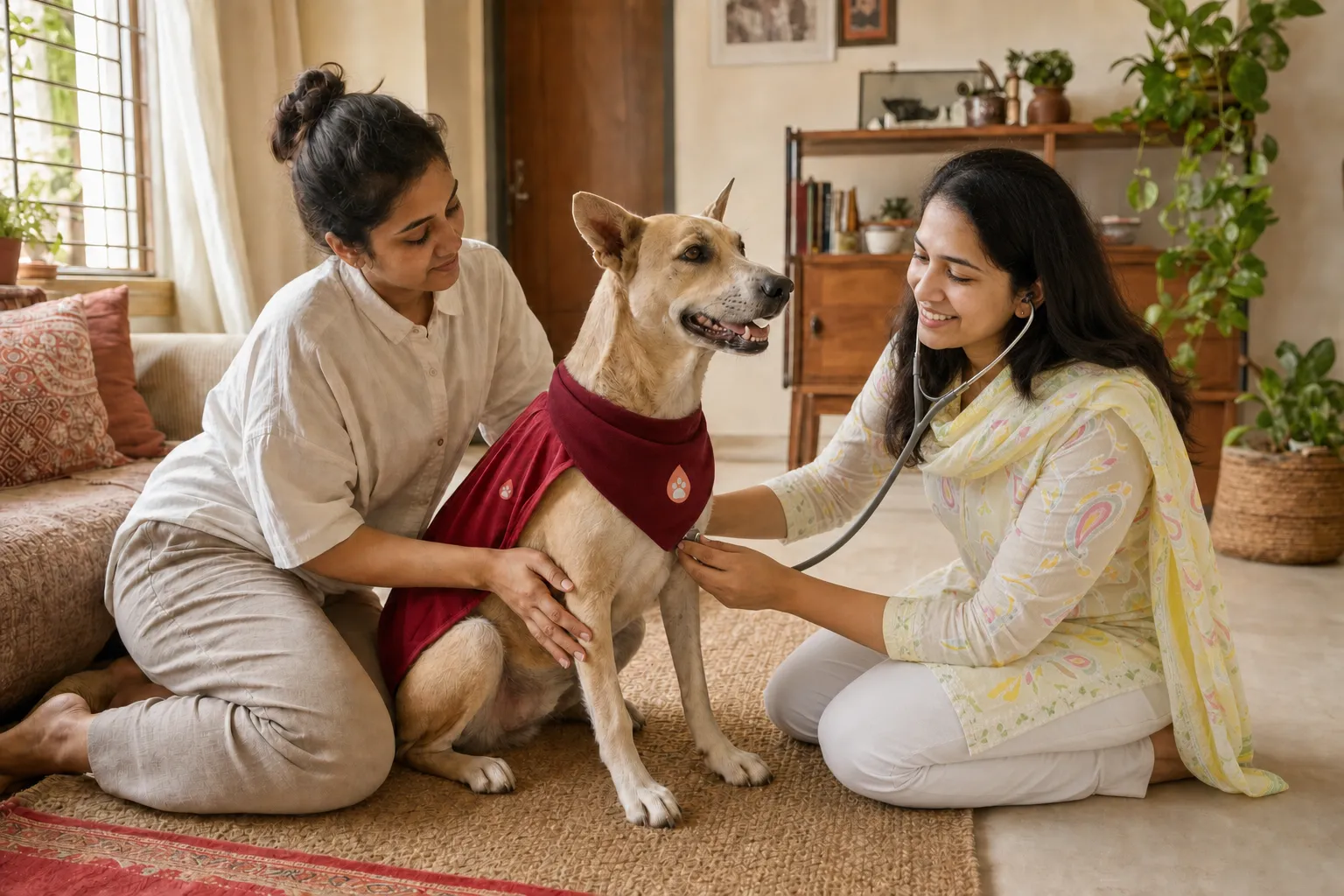
Screening
Every candidate is screened before enrolment, and selected checks are repeated according to the donor’s schedule and risk. Screening and the donor prevention programme are provided at no cost to the family.
01 — Screening
Establishes a baseline packed cell volume and confirms your dog can donate without becoming anaemic. Repeated before every donation.
02 — Screening
Confirms the liver is handling protein and clotting factor production normally, which matters for plasma quality as well as donor safety.
03 — Screening
Reviews renal filtration markers, electrolytes and hydration as part of the donor’s complete health assessment.
04 — Screening
Molecular screening for tick fever organisms. This is the single most important infectious disease screen in Indian canine transfusion practice, and PCR detects carriers that a blood smear will miss.
Occasionally a screen turns up a finding the family did not know about. We will always tell you, explain what it means in plain language, and share the results with your regular veterinarian if you would like us to. Your dog may not be able to donate, but you will leave knowing something important.
The process
Nothing here is rushed. The family can stop at any point, and the dog is reassessed every time. These are the nine stages in the full pathway.
Tell us your dog’s age, breed, weight, medical history, medication, transfusion history, preventive care and temperament. We explain the programme, the commitment and the reasons a dog may be deferred before arranging a visit.
We meet your dog where they are most comfortable. The home visit lets us see normal behaviour, handling tolerance and the household environment, and gives the family time to ask questions without the pressure of a collection appointment.
The veterinary review covers body condition, weight trend, temperature, hydration, mucous membranes, cardiovascular and respiratory examination, lymph nodes, skin, coat, previous disease, travel, tick exposure, medication and vaccination records.
We evaluate red cells, white cells, platelets and the blood film; liver- and kidney-associated measurements; urine where required; blood type; and molecular screening for relevant tick-borne pathogens. Abnormal or inconsistent findings are investigated before any enrolment decision.
Every result is discussed with the family. If the dog is suitable and the family wants to continue, we create the donor record, document blood type, set the prevention schedule and agree how future donation appointments will work.
History is updated and the dog is examined again. Weight, hydration, temperature, mucous membranes and a fresh red-cell check are reviewed. A dog can be deferred that day even after a normal enrolment screen.
The dog settles on a padded surface with their family and veterinary team present. The collection site is clipped and prepared aseptically. We rely on calm handling and donor selection rather than routine sedation, and we stop if the dog is uncomfortable.
After collection the dog rests, has water and a snack, and is reassessed before leaving. The family receives written aftercare and a direct route back to the team; we check in after the visit.
The collection is identified to the donor record, separated into components, leukocyte-reduced during processing, stored under controlled conditions and tracked through issue. Donor, unit, test, recipient request and outcome records remain linked.
Donor enquiry
This is a no-obligation first enquiry. The veterinary team reviews the whole picture; an answer here never enrols or automatically rules out a dog.